
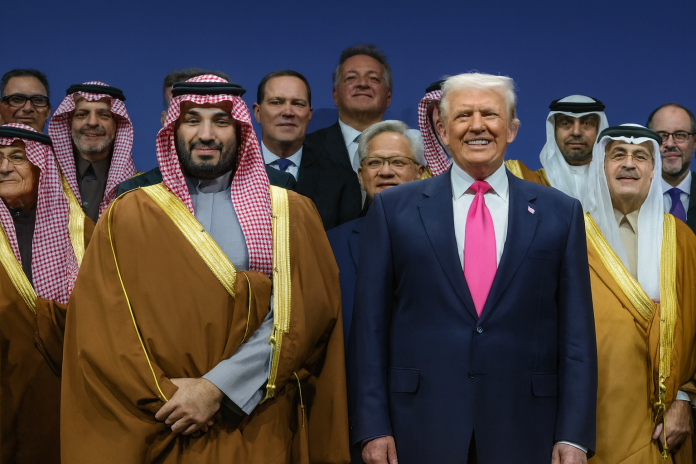
The U.S. approval to export 35,000 NVIDIA Blackwell chips worth nearly $1 billion to the UAE’s G42 and Saudi-backed HUMAIN marks a pivotal shift in Middle East AI geopolitics. It signals both countries’ emergence as serious players in hyperscale compute and the U.S.’s willingness to shape, not block, their ascent under controlled conditions.
A Calculated Green Light from Washington
These approvals are not casual.
Blackwell GPUs sit at the extreme frontier of AI compute, and the U.S. has been cautious about exporting them due to national security and supply chain concerns. Allowing G42 and HUMAIN to procure them suggests three things:
- The U.S. wants to reset ties with UAE and Saudi Arabia through strategic tech cooperation.
- Washington prefers influence over isolation, especially as China courts the region aggressively.
- Any export comes with strict compliance, security guarantees and monitoring, ensuring chips are not diverted to restricted actors.
As UAE’s ambassador Yousef Al Otaiba notes, this move reflects “confidence that underpins collaboration in advanced technology and national security.”
Why G42 and HUMAIN Matter in the Global AI Map
Both companies are no longer regional challengers they’re becoming global-scale AI infrastructure owners.
- G42 is building bio-AI, national-scale compute and enterprise AI ecosystems across the UAE.
- HUMAIN, fresh from major announcements with AMD and Cisco, is anchoring a massive AI infrastructure buildout, with its first 100MW site already fully contracted by Luma AI.
With access to Blackwell chips, they move from “ambitious” to operationally formidable.
A Broader Middle East Strategy: From Oil Power to Compute Power
These shipments accelerate the region’s push to become the world’s next AI super-node a hub for video generation, model training, multimodal systems, and sovereign AI development.
The timing is also strategic:
- The Middle East is investing billions into renewable-powered data centers.
- Demand for training compute is surging across Asia, India, Africa and Europe.
- The region wants independence from Western clouds while still aligning with Western tech.
The U.S. approvals give G42 and HUMAIN the runway to scale without seeking restricted Chinese suppliers a geopolitical priority for Washington.
The Road Ahead
Expect three outcomes in the next 12–18 months:
- Rapid buildout of Blackwell-enabled clusters in UAE and Saudi Arabia.
- Deepened U.S.–GCC partnerships, especially in AI safety and infrastructure.
- A shift in global compute gravity, with the Gulf emerging as a preferred training hub for multimodal and generative video AI.
This isn’t just a chip shipment it’s a structural move in the global AI race, positioning the Middle East as one of the fastest-growing AI power centers