
Imagine an AI that doesn’t just respond to instructions but sets its own goals, acts independently, learns from outcomes, and adapts over time. That shift is at the heart of agentic AI, an evolution beyond prompt-based and rule-driven systems. In this era of AI adoption, the concept of productivity is changing. The real question isn’t whether machines will replace humans. It’s whether someone using AI will outpace someone who isn’t.
What Agentic AI Means in Practice
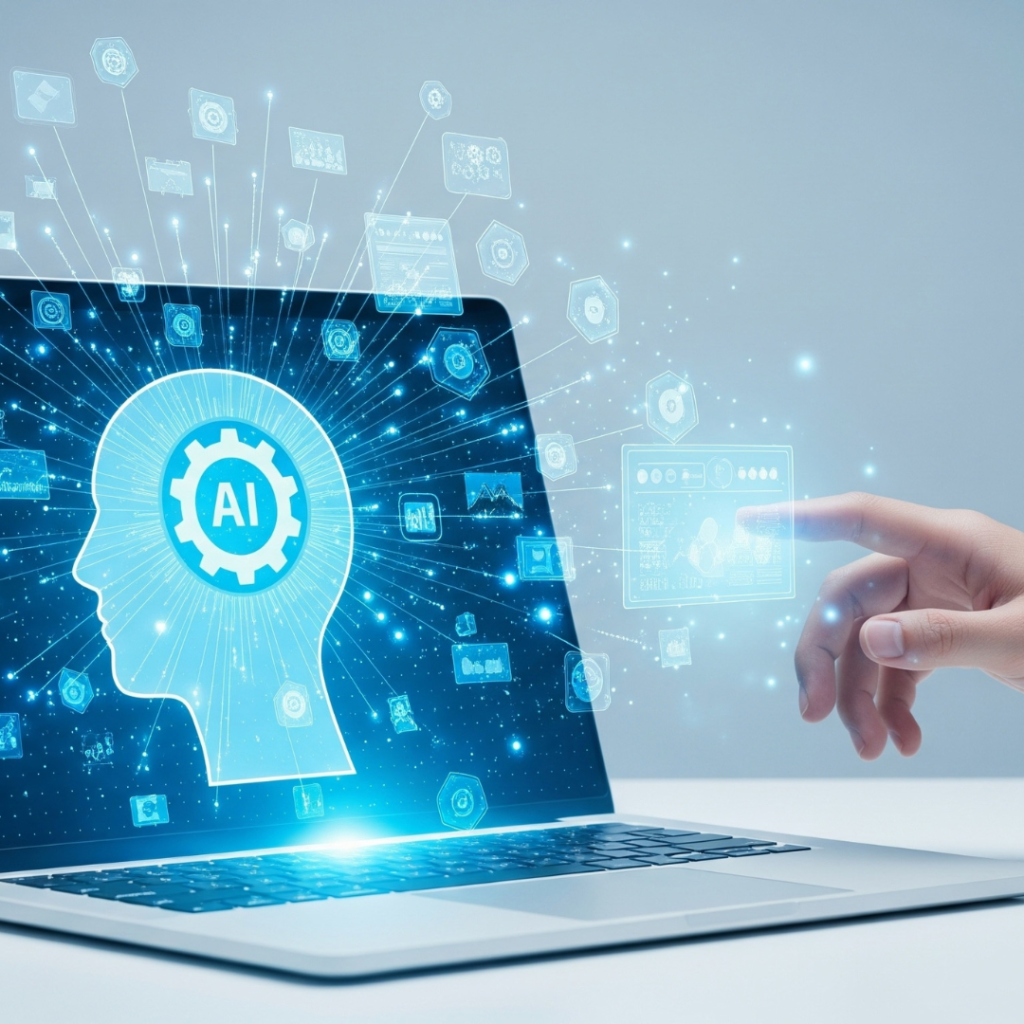
Agentic AI refers to AI systems built to operate with autonomy. They can plan, make decisions, execute tasks, and refine their approach with minimal human oversight.
Key attributes of agentic AI include:
- Setting goals based on high-level objectives rather than following a fixed script.
- Acting on those goals, triggering workflows, integrating with systems, and initiating actions.
- Learning from results to adjust behaviour and improve performance
These characteristics distinguish it from both traditional automation and generative AI that respond only to direct prompts.
Why This Matters Right Now
From a business perspective, agentic AI is starting to deliver real value:
- In a survey of senior executives, 79% say AI agents are already being adopted, and 66% of adopters report increased productivity. (PwC)
- According to market forecasts, by 2028, 33% of enterprise software applications will include agentic AI, up from less than 1% in 2024, and 15% of day-to-day decisions could be made autonomously.
- Some estimates suggest the agentic AI market could be worth nearly US$196 billion by 2034(Atera), and the global impact of roughly 3.5% of world GDP by 2030.
How It’s Changing Work, Media, Marketing and More
For professionals working in media, marketing, tech, and business development, the implications are clear: using AI isn’t optional; how AI is used is the edge. Consider the following vectors:
- Media & marketing workflows Agentic systems can autonomously plan campaigns, adjust bids, optimise creative assets, and learn from performance in real time, freeing teams to focus on strategy rather than execution.
- Customer service and engagement AI agents guided by goals (for example, reduce churn by 5%) can self-route tickets, issue refunds, provide personalised offers and learn patterns of friction without human prompts.
- Operations and logistics Agentic AI monitors supply-chain fluctuations, adapts routing, reallocates resources dynamically, and improves responsiveness in high-volume systems.
- Decision-making across functions. Rather than humans receiving analytics and then acting, agentic systems close that loop: they identify insights, trigger actions and continuously refine so that decision latency shrinks.
What This Means for Professional Roles
In the age of agentic AI, the key isn’t whether a job exists; it’s whether a role evolves to use AI as a teammate and amplifier.
People who learn to guide, monitor and collaborate with autonomous systems will gain the leverage. Those who stick with manual ways will risk falling behind.
The emphasis shifts from “doing” to “orchestrating” AI-led workflows. That means: designing the right goals for AI agents, ensuring data and systems integrate, monitoring output quality and ethical implications.
Also read this: Bollywood’s ₹15,000 Crore Decline: OTT platforms are reshaping
Looking Ahead
As agentic AI becomes part of the operational fabric, organisations must build frameworks for governance, transparency, human oversight and fairness.
For professionals, the approach is clear:
- Understand how agentic AI differs from previous AI waves.
- Think not only about tools but about process and role redesign.
- Embrace the mindset of “AI as partner” and ensure workflows let the AI agent do the heavy lifting while human talent focuses on higher-value work.
In short, the future isn’t that AI replaces people, it’s that people using agentic AI replace people who don’t.