
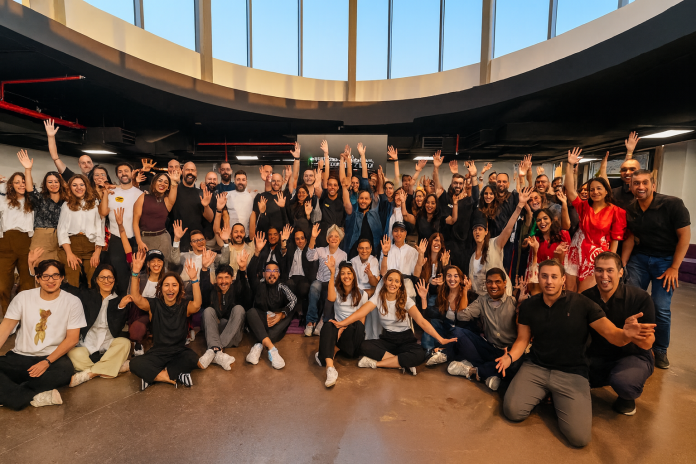
Publicis Groupe Middle East has unveiled Potentialis, a region-wide human–AI enablement programme built to redefine how talent works, learns, and creates. With a curated cohort of 100 AI ambassadors, the initiative aims to embed structured tools, smarter workflows, and applied AI practices directly into the day-to-day operations of teams across creative, media, data, and strategy.
This marks one of the region’s most ambitious talent-transformation programmes designed not to replace people, but to elevate their capabilities.
Why Potentialis Matters Now
As agencies navigate accelerated transformation, AI literacy has become a core competitive advantage. Publicis’ new programme moves beyond experimentation, focusing instead on practical adoption, operational efficiency, and future-ready skills that can scale across markets.
Potentialis stands on a simple premise:
AI doesn’t diminish human creativity it amplifies it.
Leadership Perspectives
Jennifer Fischer, Chief Innovation & Growth Officer, Publicis Groupe MENA, highlighted the shift:
“Potentialis is about unlocking talent superpowers through collaboration with AI. Skills are no longer fixed; they are fluid. AI enables people to learn faster, stretch further, and reinvent their capabilities in real time.”
Bassel Kakish, CEO, Publicis Groupe Middle East & Turkey, added:
“AI is not here to replace our talent; it’s here to equip them. Our people are the superheroes AI is the modern-day Iron Man suit that expands what we can do.”
The Bigger Picture
With clients demanding faster insights, adaptive creativity, and measurable outcomes, Potentialis gives Publicis teams a structured system to:
- accelerate ideation and content creation,
- strengthen strategy with real-time intelligence,
- enhance operational efficiency,
- and upskill talent at scale across MENA.
This is not just training. It’s a cultural reset positioning Publicis as a regional leader in AI-powered creative transformation.
Potentialis sets a new benchmark for how agencies evolve in the AI era:
not by replacing human creativity, but by augmenting it with intelligent tools and empowered talent.
A future where people and machines don’t compete they co-create.