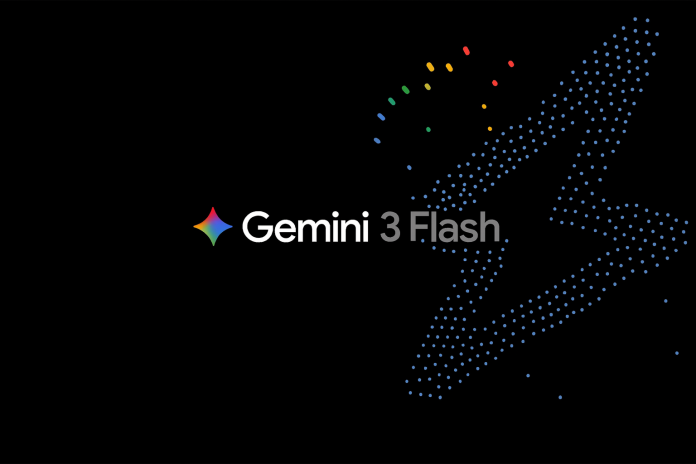
Google has made Gemini 3 Flash its default AI model, marking a decisive shift in how the company delivers performance, efficiency, and scale across its AI ecosystem.The latest Flash model delivers 3× faster performance, uses 30% fewer tokens, and leads multimodal benchmarks with an 81.2% score setting a new standard for real-time, production-grade AI.This isn’t just a model upgrade.It’s a strategic statement about where Google believes AI value is heading.Less latency. Lower cost. More capability.
Why This Shift Matters
As AI moves from experimentation to everyday workflows, the competitive advantage is no longer defined by raw intelligence alone but by speed, efficiency, and deployability at scale.
By making Gemini 3 Flash the default, Google is prioritising:
- Faster inference for real-world applications
- Lower compute and token costs
- Seamless multimodal performance across text, image, and video
In short, Google is optimising AI not for demos but for daily enterprise use.For developers, marketers, and product teams, this signals a future where advanced AI is no longer resource-heavy or slow it’s always-on and production-ready.
Performance at the Core
Gemini 3 Flash’s technical gains are significant:
- 3× faster execution, enabling near real-time responses
- 30% fewer tokens, reducing operational costs
- 81.2% multimodal benchmark score, topping its category
These improvements unlock advanced use cases that were previously constrained by latency or cost, including:
- Video analysis at scale
- Visual question answering
- Structured data extraction from complex media
This is AI designed for speed-sensitive environments—where milliseconds and margins matter.
Enterprise Adoption: From Capability to Workflow
Early enterprise adopters like JetBrains, Figma, and Cursor are already integrating Gemini 3 Flash through Vertex #AI, embedding it directly into high-speed, scalable workflows.
This highlights a broader shift:
AI is no longer a separate tool it’s becoming infrastructure inside core products.By powering developer tools, design platforms, and productivity software, Gemini 3 Flash positions Google as a foundational layer in how modern teams build, design, and ship.
The Strategic Signal Behind “Default”
Making Flash the default model sends a clear message:
The future of AI adoption depends on efficiency as much as intelligence.
Rather than pushing the most complex model for every task, Google is betting on right-sized intelligence models that deliver strong performance without excessive cost or delay.
This mirrors a wider industry trend:
- Smarter routing over bigger models
- Practical AI over maximal AI
- Scalable deployment over experimental power
For enterprises, this translates into faster ROI and easier integration.
The Bigger Trend: AI Becomes Invisible Infrastructure
Gemini 3 Flash reflects a larger evolution in AI strategy:
- Models are becoming lighter, faster, and cheaper
- Multimodality is now table stakes, not a differentiator
- The winning platforms are those that disappear into workflows
As competition intensifies with OpenAI, Anthropic, and Meta, Google is leaning into its core strength: shipping AI at global scale.
Not louder.Not flashier.Just faster and everywhere.
Google making Gemini 3 Flash the default AI model marks a pivotal moment in enterprise AI adoption.
It signals that:
- Speed is now a primary differentiator
- Cost efficiency drives scale
- Multimodal AI is ready for mainstream workflows
This isn’t just a performance upgrade.It’s a strategic recalibration.Google isn’t just building smarter AI.It’s making AI faster, cheaper, and unavoidable.