
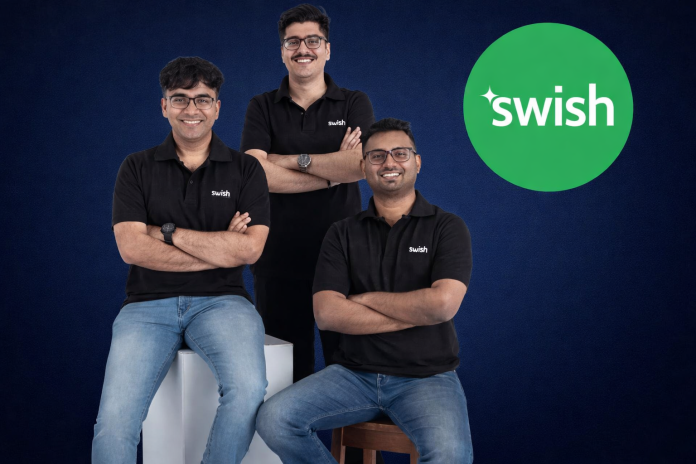
Bengaluru-based Swish is taking a different approach to ultra-fast delivery by focusing on a full-stack, hyperlocal model built around density rather than rapid geographic expansion. While competitors like Swiggy, Zomato, and Zepto are becoming more cautious about ultra-fast delivery due to profitability concerns, Swish is doubling down on a controlled, high-efficiency model.
The company operates its own kitchens and delivers within a 1 km radius, which significantly reduces logistics costs and improves delivery speed. This model works best in densely populated urban areas where high order volumes per square kilometre can improve unit economics. Swish has already scaled to around 20,000 daily orders, growing nearly four times in recent months, showing strong demand in its operating clusters.
The company recently raised a Series B round led by Hara Global Capital Management and Bain Capital Ventures, with participation from Accel, Stride Ventures, and Alteria Capital. The funding has pushed its valuation to $139 million, with total funding reaching $54 million, indicating strong investor confidence in the density-led quick commerce model.
What makes this strategy interesting is the focus on repeat consumption. Ultra-fast delivery works best for products customers order frequently such as meals, snacks, groceries, and daily essentials. Higher repeat orders increase customer lifetime value, which is critical for profitability in quick commerce.
What does this mean for the market?
The quick commerce industry is shifting from speed wars to efficiency wars. Companies are now focusing on unit economics, supply chain control, and order density rather than just expanding to new cities quickly.
Bottom line: Swish is betting that density + full-stack control + repeat consumption is the formula that can make ultra-fast delivery profitable and if this model succeeds, it could influence how the entire quick commerce industry expands in the future.
—