
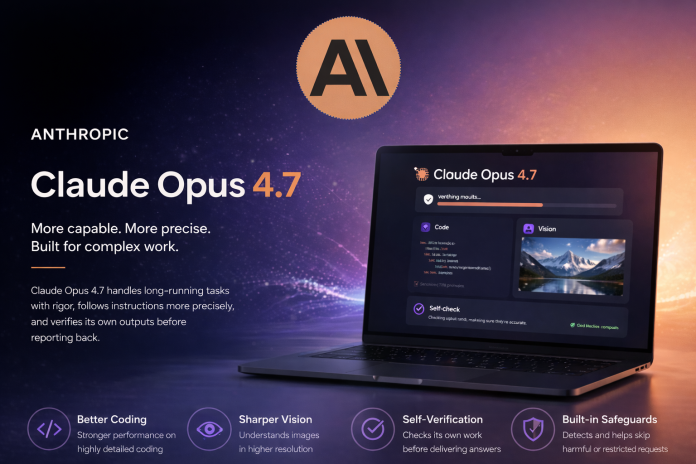
The launch of Opus 4.7 marks a significant step toward AI systems capable of handling complex, long-running tasks with minimal human intervention. Built for enterprise use, the model combines enhanced coding performance with adaptive reasoning, enabling it to tackle multi-step workflows more effectively.
A key innovation lies in its effort controls, allowing users to balance speed, cost, and depth of reasoning based on task requirements. This flexibility makes it suitable for a wide range of use cases, from rapid execution to more deliberate, high-accuracy problem solving.
The model also introduces improvements in autonomy, memory, and vision capabilities, signalling a shift toward AI systems that can plan, execute, and optimise workflows end-to-end. Rather than acting as simple assistants, these systems are evolving into intelligent operators capable of managing enterprise-grade processes.
This reflects a broader industry trend where AI is moving beyond task-level automation to orchestrating complex operations across functions.AI is evolving from tools to autonomous systems capable of managing full workflows.
Bottom line: Opus 4.7 highlights the transition toward adaptive, self-optimising AI that can drive efficiency and scale across enterprise environments.