
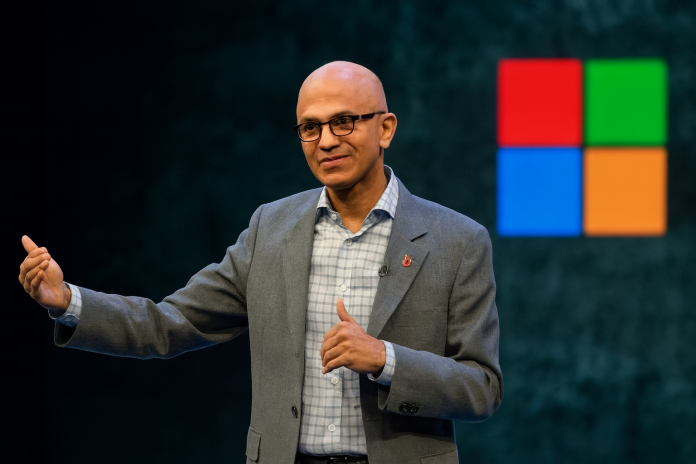
Microsoft CEO Satya Nadella’s latest Copilot adoption update sends a strong signal to markets questioning whether enterprise AI investments are translating into real usage and revenue. With consumer Copilot daily users nearly tripling year-on-year, GitHub Copilot crossing 4.7 million paid subscribers, and Microsoft 365 Copilot reaching 15 million paid seats, Microsoft is demonstrating that AI is moving beyond experimentation into habit-forming, paid utility.
For Microsoft, this traction is strategically critical. As hyperscalers face growing scrutiny over massive AI infrastructure spend, Copilot has become a proof point for monetisation at scale. Unlike standalone AI tools, Copilot is deeply embedded across workflows developers and enterprises already rely on coding, productivity, collaboration, and decision-making. This lowers adoption friction and accelerates value realisation, turning AI from a “nice-to-have” into a daily work companion.
GitHub Copilot’s growth is especially telling. Developers are among the most demanding AI users, and sustained paid adoption suggests Copilot is delivering measurable productivity gains. Meanwhile, Microsoft 365 Copilot’s expansion to 15 million seats highlights a broader enterprise shift: companies are no longer asking if they should deploy AI, but how widely and how fast.
Nadella’s comments also underscore Microsoft’s partner-led AI strategy. Continued collaboration with OpenAI and Anthropic allows Microsoft to stay model-agnostic at the application layer while focusing on distribution, trust, and enterprise readiness. This positions Copilot not just as a feature, but as a platform for ongoing AI value creation.
From an industry lens, the update reframes the AI spending debate. While infrastructure costs remain high, Microsoft’s Copilot metrics show that AI can scale profitably when tightly integrated into core products. The companies winning the AI era won’t just build powerful models they’ll embed them where work already happens.
Overall, Copilot’s momentum strengthens Microsoft’s narrative: AI is no longer a future promise it’s a present-day revenue engine.